Casting6 min readUpdated
How to choose creators in Los Angeles for an intimate brand
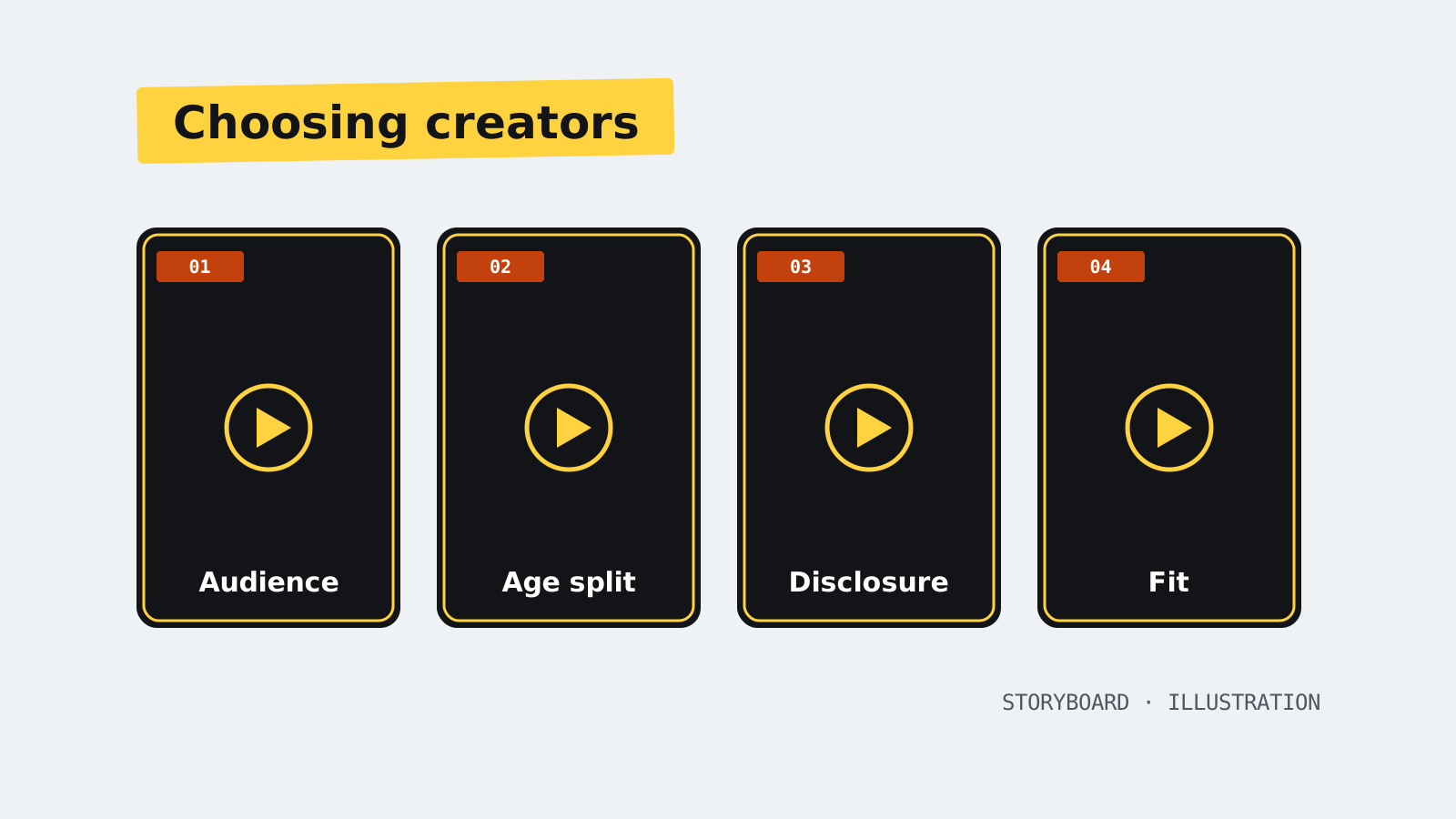
Choosing creators in Los Angeles for an intimate brand comes down to four checks, in order: who actually watches, whether the engagement is real, how they disclose paid work, and whether they fit.
The short version
Choosing creators for an intimate brand is less about size and more about four checks, done in order. Who actually watches them. Whether their engagement is real. How they handle paid work. And whether their voice fits yours. A creator who fails an earlier check does not get a later one, however good their content looks.
Check who is watching
Ask for the audience breakdown from the platform's own analytics: age, gender and top locations. For sexual wellness, lingerie and dating brands, the age split matters more than anything else. A creator whose audience includes a large share of teenagers is the wrong choice, whatever their reach.
Platforms are tightening this too. Since October 2025, Instagram has shown teen accounts PG-13 content by default and kept teens from following accounts that share age-inappropriate content. We cover how that shapes strategy in creator brand strategy.
Check the engagement is real
Bought followers and engagement pods still exist. HypeAuditor's 2023 State of Influencer Marketing report put the share of influencers affected by fraud at about 36 percent, and close to 60 percent among accounts with over a million followers.
Bigger and newer figures circulate widely online, and some cannot be traced to any published study. Use industry numbers as a reason to check, not as a measurement of the creator in front of you.
Look at the creator's own numbers instead: comments that respond to what was said, saves and shares on recent posts, and steady growth rather than sudden jumps.
Check how they disclose
Scroll back through their sponsored posts. Do they disclose clearly, in words and near the start, or bury it in hashtags? The FTC holds brands responsible as well as creators, and its 2023 guidance says platform labels alone may not be enough. A creator who has disclosed well before will do it well for you.
Check the fit
Last, and only for creators who pass the first three: does their tone suit your brand, have they spoken about your category before, and would their audience believe them recommending your product? Fit is covered in depth in creator brand fit.
Why Los Angeles, and when not
Los Angeles has a large bench of creators, studios and crews, which makes casting and filming faster. But the audience decides the location, not the other way round. If your customers are elsewhere, cast creators whose audiences are there too. How we run casting is described on creator marketing in Los Angeles, and what to pay by creator size in micro versus macro creators.
A casting shortlist
| Column | What to record |
|---|---|
| Creator and platforms | Handle, main platform, other channels |
| Audience | Share aged 18 and over, main locations |
| Engagement check | Whether comments look real and on topic |
| Disclosure history | How clearly past sponsored posts were labelled |
| Fit notes | Tone, topics, past brand deals |
| Rate and availability | Quoted fee, usage terms, next free dates |
Red flags in a feed
- Sudden jumps in followers with no viral post to explain them.
- Comments that are generic, repeated or unrelated to the post.
- Recent sponsored posts with no disclosure, or disclosure buried in hashtags.
- Content aimed mainly at teenagers, whatever the follower count.
- Promotion of a competitor in the past few weeks.
Questions for a first call
- Have you talked about intimate or sexual wellness topics before, and how did your audience react?
- What will you not film or say?
- Can you share platform analytics for audience age and location?
- How do you usually disclose paid work?
- What usage rights do you offer, and at what rates?
Good creators ask as many questions back. That is a good sign, not a nuisance.
Working with managers and agencies
Many established Los Angeles creators work through managers or talent agencies. They handle rates, contracts and scheduling, and they protect their talent from unsuitable deals. Approach them with a concise brief, a fee range and the usage you need. Expect negotiation on rights and exclusivity rather than on the base fee alone, and respect their timelines; a manager who trusts you brings you other creators later.
A paid trial before a long deal
Before committing to an ambassador programme, run one paid post or a small UGC package with a new creator. It shows how they take a brief, how their audience responds to an intimate product and how they handle approvals. A short trial costs a fraction of a long contract and prevents most mismatches. Our guide to brand fit covers the judgment calls.
Negotiating fairly
Fees reflect the creator's audience, the work involved and the rights requested. Negotiate scope rather than squeezing rates: fewer deliverables, shorter usage or no exclusivity can bring a quote within budget without asking a creator to undervalue their work. Pay on time, credit them where agreed, and keep promises about approvals. In a connected scene, fair dealing is remembered.
Checking audience location
A Los Angeles creator may have most of their audience elsewhere in the US, or even abroad. If your brand ships only to certain states or countries, check the location breakdown before booking. A creator with a smaller audience concentrated where you sell can deliver more customers than a larger one whose followers cannot buy from you. Ask for screenshots from the platform's own analytics, dated within the last month.
Building a bench
Over time, keep a bench of creators who have worked well with you: their strengths, audiences, rates and how they handled approvals. A bench lets you move fast when a seasonal campaign or a product launch comes up, and it rewards reliable creators with repeat work. Review it twice a year and add new names from trials. Our guide to micro vs macro creators helps decide the mix.
Timing your search
Start casting six to eight weeks before a seasonal campaign. LA creators fill their calendars early around Valentine's Day, Pride in June and the holidays, and the best fits are often booked first. Off-season casting is easier and cheaper, which makes it a good time to run trials and build the bench.
Contracts before content
Agree deliverables, deadlines, approvals, disclosure, claims, usage rights and payment terms in writing before anything is filmed. A one-page summary on top of the contract helps both sides remember exactly what was agreed, months later.
After the campaign
Send each creator their results and a thank-you. Creators who see what worked improve next time.
Summing up
Check who is watching, whether engagement is real, how they disclose and whether they fit. Trial before long deals, negotiate scope rather than squeezing fees, and build a bench of reliable creators. Rights are covered in usage rights.
Sources cited
Linked for reference. Regulators update their guidance, so treat this page as a starting point.
Questions brands ask
- How many followers should a creator have?
- Fewer than most brands assume. Smaller creators often have closer relationships with their audiences, and HypeAuditor's 2023 report found fraud was most common among accounts with over a million followers. Choose on audience and fit first.
- Which analytics should we ask creators for?
- Screenshots or exports from the platform itself: audience age and gender split, top locations, reach and saves on recent posts, and results from any past sponsored work.
- Are fake-follower statistics online reliable?
- Treat big, recent numbers with caution. Some widely repeated figures cannot be traced to a published study. Check the creator's own data instead of relying on industry averages.